

In a very dialectical spirit, I’d like to bring together two opposing take-spheres on the recent hantavirus outbreak using Manifold markets.
On one hand, most professional forecasters agree with mainstream health organizations that hantavirus is not as serious of a threat as the media has made it out to be. Top forecaster Peter Wildeford wrote an excellent piece on this called “Hantavirus won’t be the next COVID,” breaking down exactly that. Primarily, the epidemiology of the disease does not lend itself to pandemic potential:
…critically, the infectious window of hantavirus is short and centered on visible illness. Andes virus infectiousness peaks on the same day a patient develops fever and drops sharply within days. Unlike COVID, pre-symptomatic transmission is minimal. By the time someone is contagious enough to seed a superspreading event, they look sick with a fever — which is why isolation works at all. This is the profile of a virus public health can contain.
On the other hand, many other pundits agree with the cottage industry of blogger virologists that hantavirus is quite worrisome because of what it says about how the world is coordinating around risky outbreaks. If hantavirus had slightly higher human-to-human spread, we could be in a very different world. There still might be a couple passengers from the ship unaccounted for, and over the last week there still have been breaches in quarantine in certain nations that would be problematic in a disease with a slightly higher reproduction number.
Matt Yglesias, in his piece titled “Hantavirus is a reminder we should prepare for the next pandemic,” writes:
I checked with knowledgeable medical professionals and none of them seem especially worried about this particular hantavirus outbreak, which is great. But when I start to see headlines telling people not to panic, I get worried.
Not because you should panic about hantavirus, but because panicking is — by definition — not the correct response to any situation. If you’re facing an imminent threat, you still shouldn’t panic because panicking is never correct. So by the same token, while it’s good to hear that the objective threat level from this outbreak is by most accounts lower than I initially feared, just issuing instructions not to panic doesn’t add very much.
The implication is that everyone should just continue going about their day without changing anything. And it’s possible that’s correct advice for you and your family.
But my sense is that most American households have in fact under-reacted to the threat of novel virus outbreaks (which is perhaps why companies making well-reviewed respirators go out of business). And it’s definitely the case that the American government has under-reacted.
I think both of these takes are essentially correct. Individual American citizens almost certainly shouldn’t panic about hantavirus, but world health agencies absolutely should be jumping the gun to throw any resources they can at stopping things like the current hantavirus outbreak, especially in the first few days when its etiology and transmission dynamics were more hazy. Markets hold that there’s nearly a 1 in 3 chance of a global pandemic in the next 3.5 years! If there’s even a whiff of something that has pandemic potential, they shouldn’t hesitate to throw billions of dollars of resources at an outbreak. The base rate is roughly 10% per year, with the last two being COVID-19 and H1N1, otherwise known as swine flu.

Hantavirus will probably not be this pandemic, however. The Manifold market on a hantavirus pandemic this year has consistently been trading below 5%, several points below its Polymarket mirror.
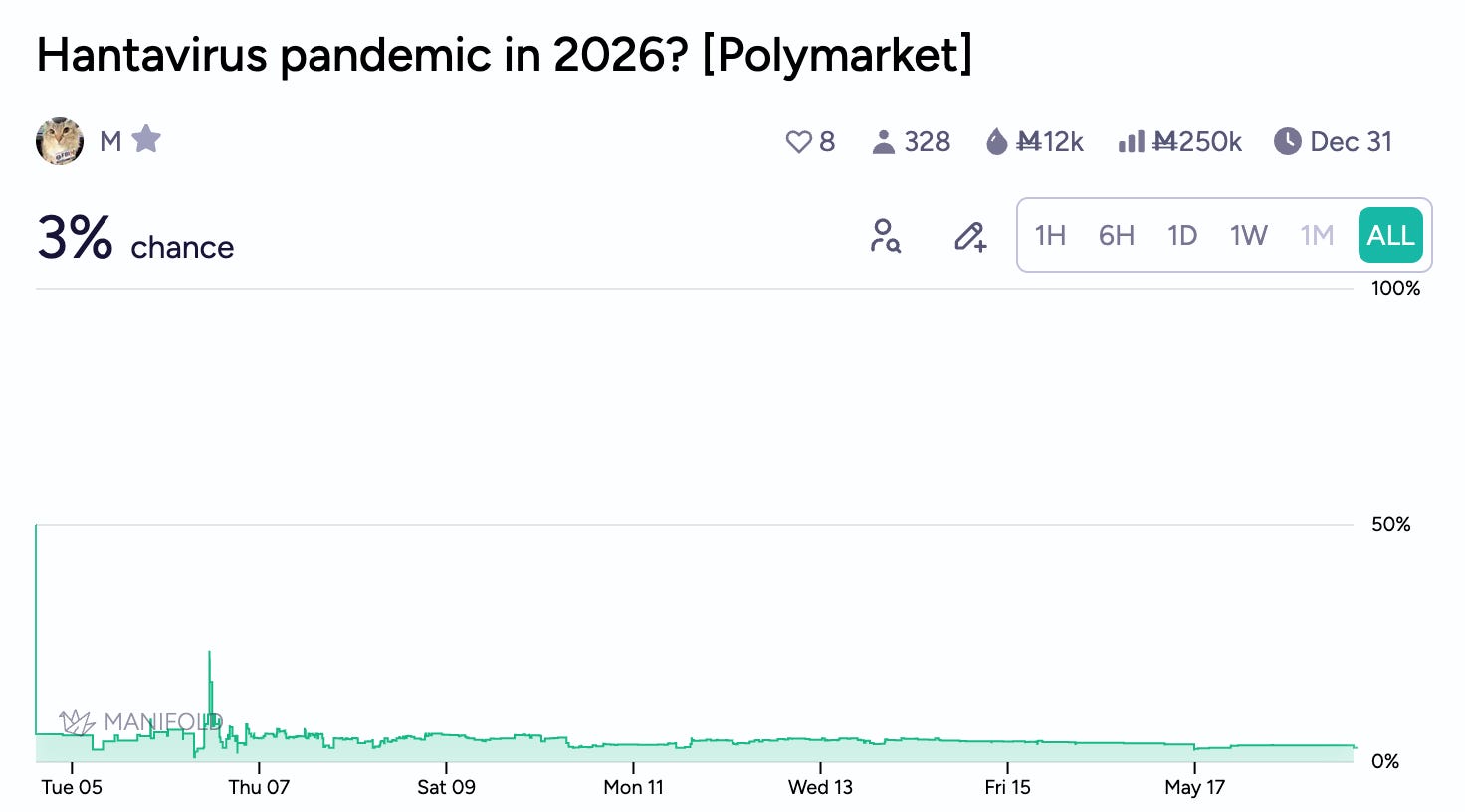
Manifold has a lower discount rate than Polymarket since the uses of Mana off the platform are considerably lower than the use of dollars off Polymarket. Even with this, the market might be overselling the likelihood of a Pandemic, which I’d personally price at around 1% or lower. Take a look at the largest shareholders:
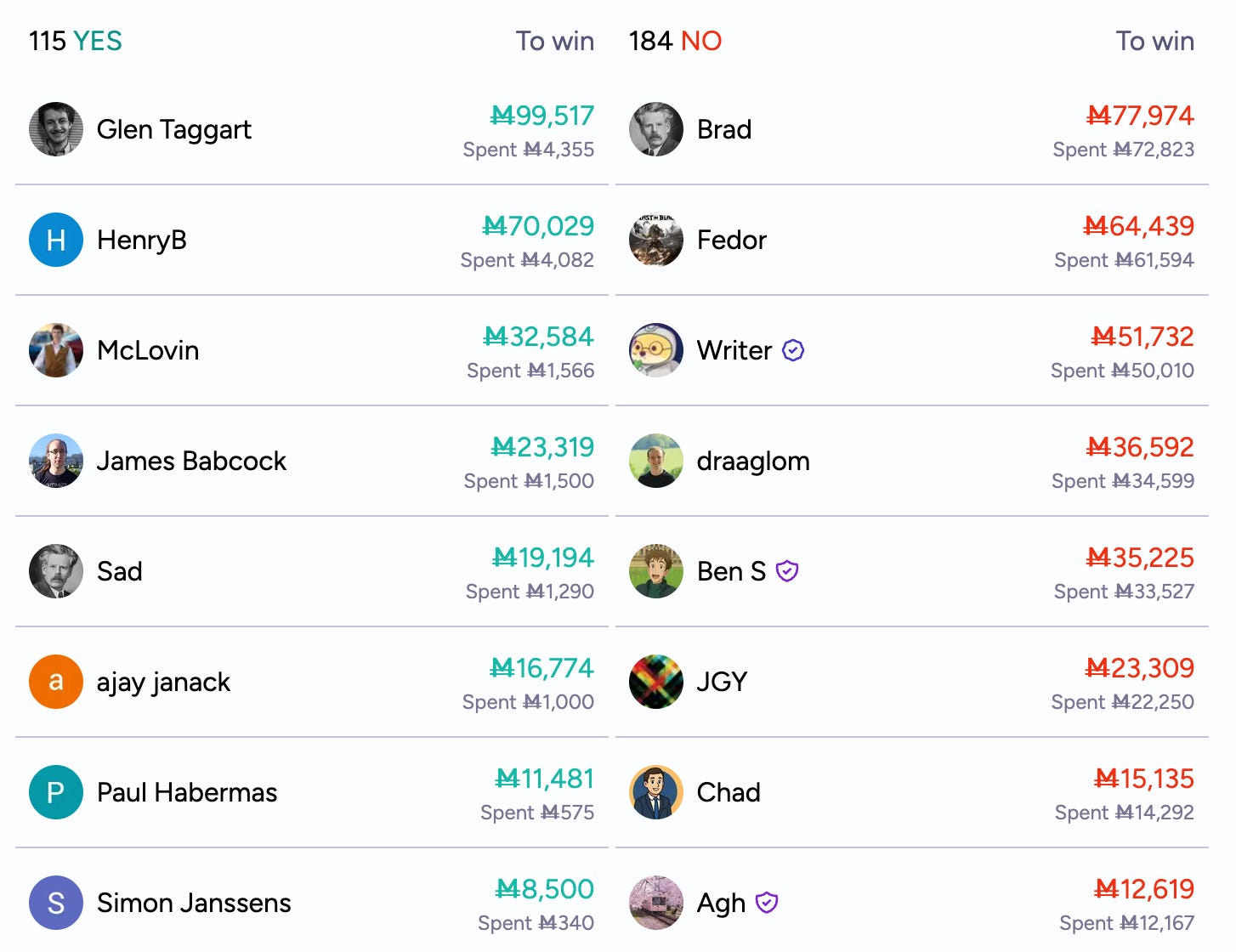
Brad, the largest NO holder, is 9th in profit all-time on Manifold, and users Chad, Agh, and yours truly also make the profit leaderboard (you might also notice YouTuber “Rational Animations” as the third largest YES holder, “Writer”). No one on the YES side can say the same.
Getting a market down below 3-5% with asymmetric profit incentives can be challenging. When you see headlines like “prediction markets give X (thing happening in many months) a 3/5/10% chance,” this is something to keep in mind as an interpretative artifact!
Traders think there’s only about a 1 in 2 chance that even a single non-passenger will contract hantavirus from the MV Hondius outbreak. Surprisingly, the outbreak has still been limited to passengers and crew on the ship.

I’m not sure why this market spiked recently from where it was trading at around 30%, but perhaps it has to do with the MV Hondius finally docking at port in the Netherlands.
A couple people have raised the possibility that the hantavirus outbreak on the ship didn’t necessarily exhibit any human-to-human spread, with passengers on the ship perhaps all being contaminated by excreta of a rat or rats on the ship (the disease is spread by the “colilargo,” otherwise known as the long-tailed pygmy rice rat). Traders think this thesis — or rather, that convincing evidence supporting this thesis will emerge — is unlikely, at just 12%.

It still may take a few weeks for the outbreak to run its course if it does continue to spread. A market on the last confirmed case gives >20% to a case after June 18th, for example:

Are scientists busy working on a vaccine? Possibly! After some volatile price action, it seems that traders believe there’s around a 30% chance that a hantavirus vaccine is trialed in humans by the end of next year.

An OSTP report found that it would only cost in the ballpark of $26 billion to prepare mRNA vaccines against each of the known 26 families of viruses that can infect humans. That sounds like a lot but it would be pennies on the dollar if they were effective against even a single future pandemic, possibly saving the US trillions in avoiding shutdowns and lowering healthcare expenditures alone, through expeditious vaccine development.
It seems quite plausible that health agencies or international funders take this hantavirus outbreak seriously enough to preemptively do at least a Phase 1 trial in humans.
Despite low chance of a pandemic, this hantavirus outbreak could still be bad! There’s a marginally higher chance that the WHO could label it as a Public Health Emergency of International Concern if things get worse, and it seems distinctly possible that public outcry or pressure might lead them to do this, counterintuitively, regardless of the actual epidemiological risks.
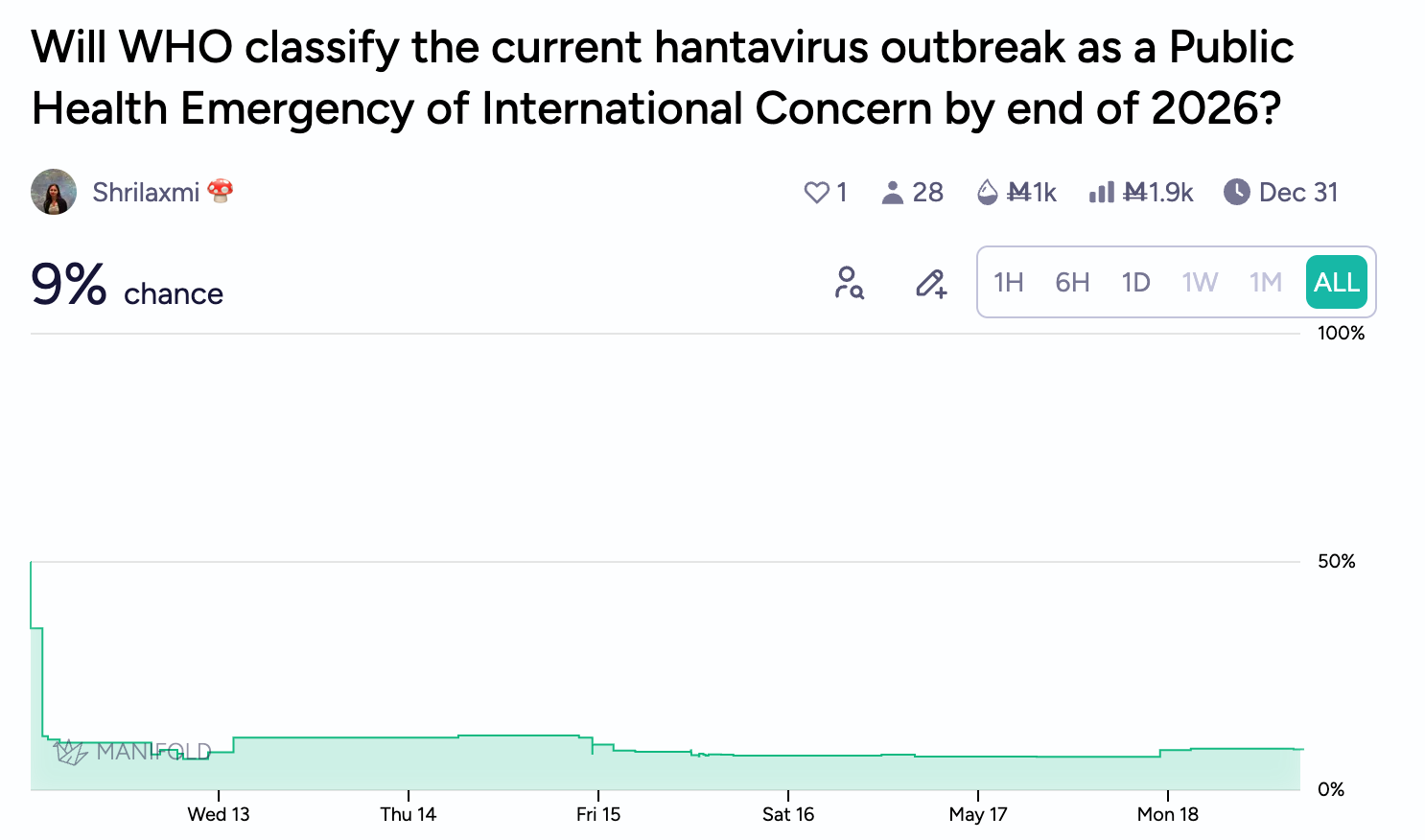
Keep in mind that there’s a base rate of about a 1 in 3 chance of any PHEIC in a given year, as these things happen fairly regularly. In fact, they happen so regularly that while writing the draft of this newsletter, one happened, kind of out of the blue!
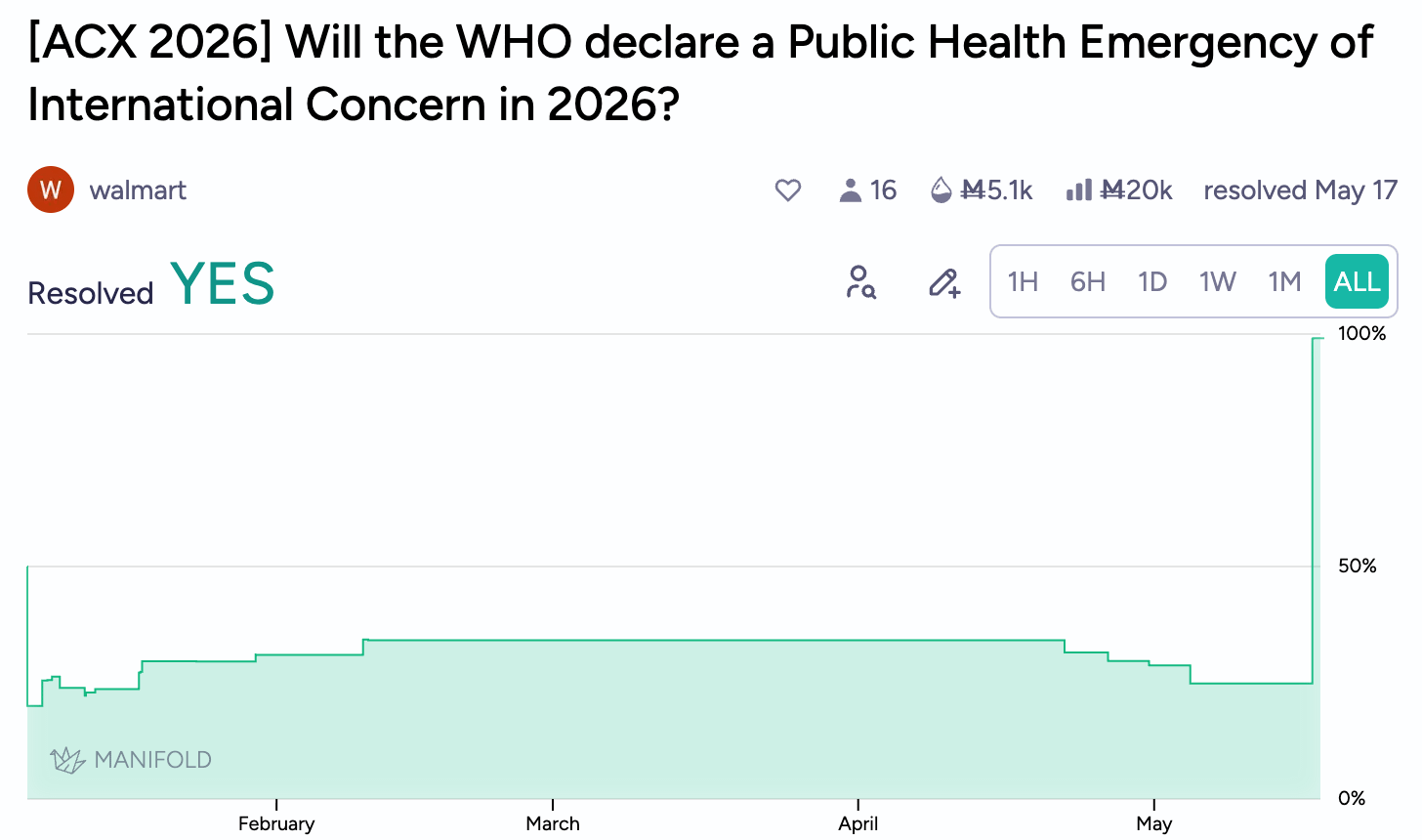
The recent ebola outbreak may have now eclipsed hantavirus! A few rumored cases of ebola in the Democratic Republic of the Congo rapidly turned into a fully-fledged outbreak over the weekend, with the WHO scrambling to account for why this happened under the radar. Perhaps health agencies were focused on hantavirus? Perhaps the U.S. distancing themselves from global health organizations played a role? This variant of ebola is not the slightly more common Zaire strain, but rather the closely related Bundibugyo strain, which complicated early testing results, confusing global health workers and putting a slight delay in the response.
Ebola outbreaks happen every couple years, with a previous outbreak from 2021 raising the alarm of a lab leak, due to suspicious genomic similarity with a previous strain from several years prior.

Ultimately, it seems far more likely that the explanation is delayed spread from a survivor of the previous outbreak as an STD, which is known to occur, but it seems remotely possible that discarded old viral samples could have led to a reinfection.
This ebola outbreak has the potential to lead to high loss of life, which makes it quite surprising that it hasn’t captured the public’s imagination in the same way the hantavirus outbreak on a cruise ship has. It has similarly failed to capture Manifold market creators’ imaginations, thus far, and we invite users to create more markets to help the public track and understand this crisis.
Roundup
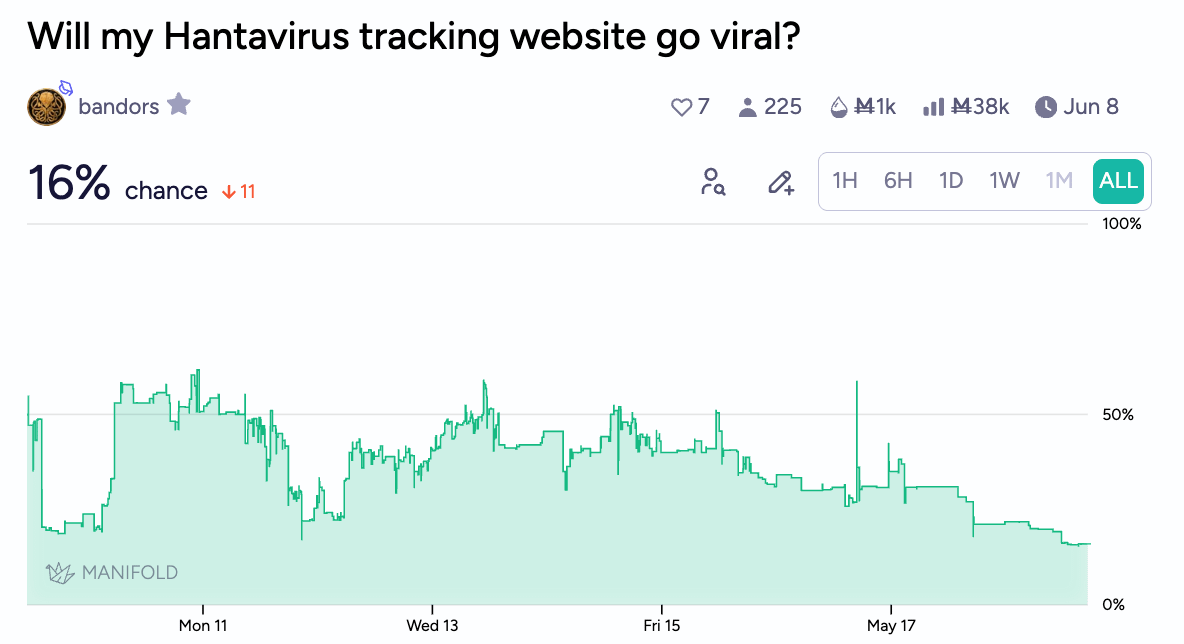
Manifold user Bandors (of FOLDED fame) has created a hantavirus tracking website which he is hoping will go viral. This market resolves YES if he gets 10k unique visitors within a month of creation. Traders think this may or may not happen. With the outbreak winding down, traders are skeptical:
And if you like longer term markets, you could trade on the possibility of a pandemic before 2030:

Happy Forecasting!
-Above the Fold